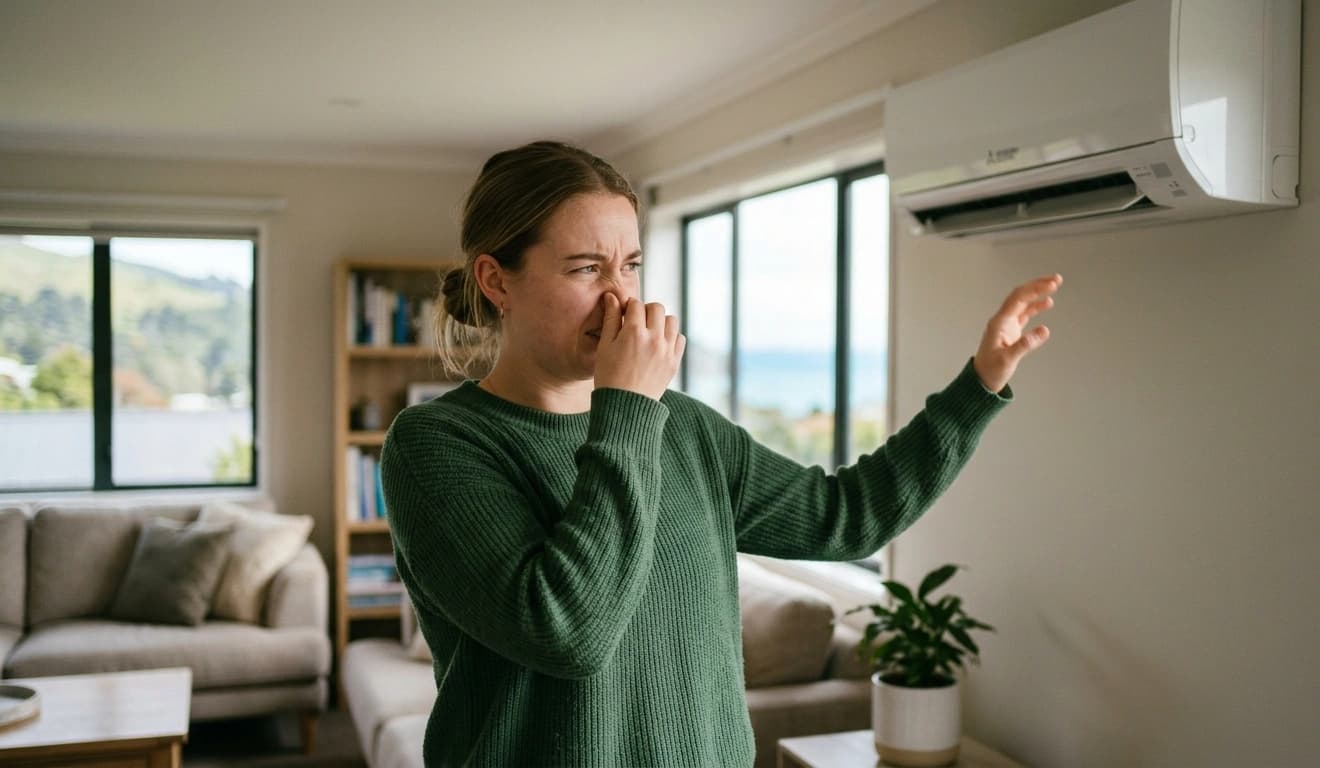
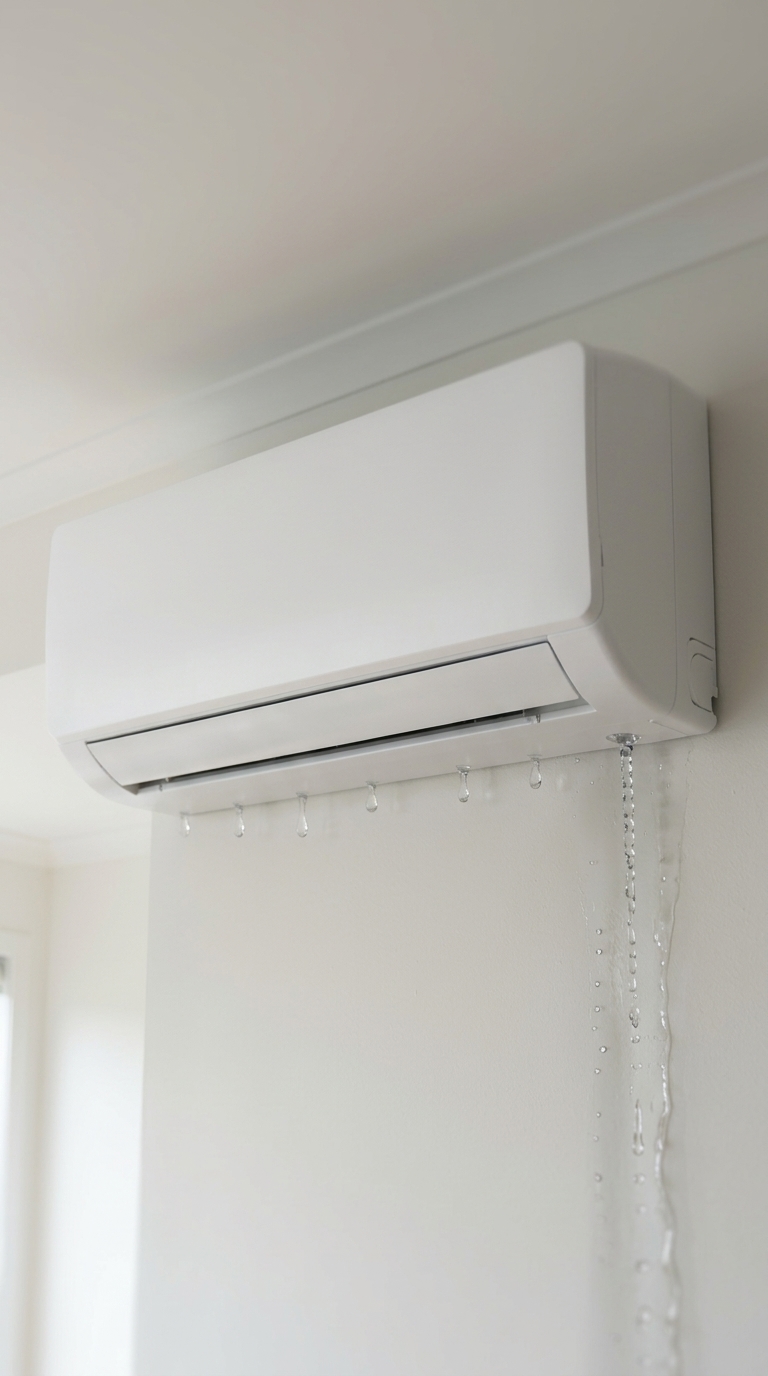
A heat pump leaking water inside is usually caused by a blocked or disconnected condensate drain line that prevents moisture from exiting the unit properly. Other potential reasons include dirty air filters causing frozen coils or a cracked drain pan that fails to catch condensation. A blocked drain or dirty coil can usually be fixed with a professional deep clean, while a cracked drain pan needs a technician.
Discovering a steady drip of water running down your wall from your indoor unit is more than just a minor annoyance. It often signals an underlying issue that can compromise your home comfort and lead to costly water damage. While some moisture is a natural by-product of the dehumidification process, an internal leak typically indicates a system problem that requires attention to prevent mould growth or damage to your interior finishes. In this guide, the team at EcoPure Heat Pump Tasman explains the most common causes of indoor leaks, ranging from blocked condensate lines to frozen evaporator coils. We will also help you distinguish between a simple maintenance task and a complex failure. By understanding these warning signs, you can protect your investment and ensure your system continues to provide clean, efficient climate control throughout the seasons.
Understanding Why Your Heat Pump Drips Water Indoors
When your heat pump operates in cooling mode during a humid Tasman summer, it functions essentially as a powerful dehumidifier. The indoor evaporator coil becomes chilled, reaching temperatures significantly lower than the ambient room air. As the system pulls warm air across these cold coils, airborne moisture reaches its dew point and transforms into liquid droplets. This process is a fundamental by-product of the refrigeration cycle, not a sign of a fault in itself.
In a healthy system, these droplets collect in a primary condensate tray, also known as a drip pan, located directly beneath the coils. From there, the water should travel through a dedicated drain line to a safe exit point outside your home. Seeing water trickling from the external pipe is normal and expected. However, if you notice water dripping from the unit, the system has failed to contain this moisture.
A leak in this context means the internal drainage system is overwhelmed or obstructed, causing water to bypass the tray and run down your wall or onto your flooring. While the moisture production is natural, its appearance inside your living space indicates a breakdown in the system's ability to manage that water. Regular deep cleaning keeps these internal pathways clear and functional, preventing the structural damage associated with indoor spills. You can see our Hydro-Flush deep clean in action on our dedicated page.
The Most Common Culprit: Blocked Condensate Drain Lines
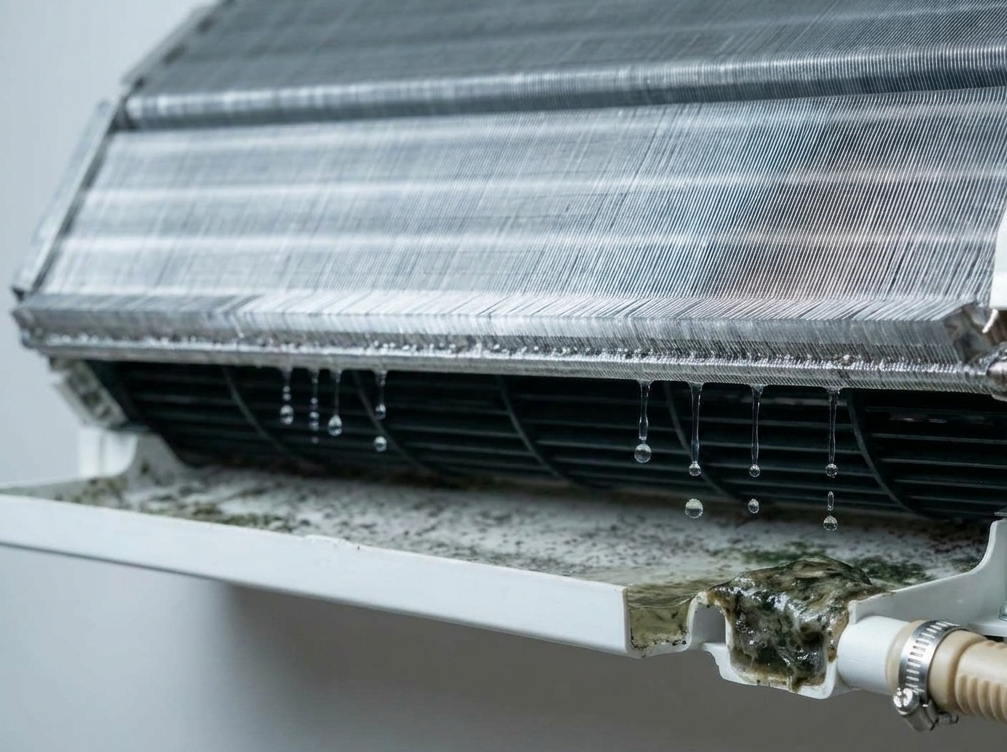
The most common reason we are called out for a leaking heat pump is a blocked condensate drain line. While the system is designed to channel moisture away, the humid conditions inside the unit create a perfect environment for biological growth. Dust, pet dander, and household lint are pulled into the system and mix with the condensation on the coils. This mixture eventually forms a thick, gelatinous substance known as sludge or biofilm. In around half the units we open, we also find mouse droppings or cockroach residue inside the casing.
This jelly-like build-up accumulates in the narrow plastic drain pipe, gradually narrowing the passage until water can no longer flow through. In some cases, the blockage originates from the outside. Local insects such as spiders or wasps frequently find the exit point of the drain line an attractive nesting spot, creating a physical plug at the very end of the system. It is worth checking the outside end of the drain hose to make sure it is not buried in soil or mulch, blocked by leaves, or kinked. Once the pipe is obstructed, the water backed up in the primary drip tray has nowhere to go. It inevitably overflows the rim, leading to unsightly water stains or damage to your interior walls.
The drain tray itself sits inside the casing, behind the coil, so it cannot be reached by simply lifting the front panel. A proper clean requires removing the casing. Standard maintenance often misses the deep-seated biofilm residing within these lines as well. Our Hydro-Flush deep clean reaches this built-up organic matter using high-pressure washing with our CoilJet system and plant-based, non-toxic cleaning products. We finish with San-Air, a natural sanitiser made from essential oils, so the entire drainage pathway is flushed clean rather than just unblocked. This prevents future overflows while keeping your system hygienic.
Dirty Filters and Frozen Evaporator Coils
Beyond physical blockages in the drain line, a disruption in airflow often leads to an indoor leak. The evaporator coil requires a steady stream of room air to function at the correct temperature. When filters become clogged with dust and pet dander, a frequent occurrence for households in Nelson and Richmond with furry companions, the airflow significantly decreases. Without enough warm air to absorb the cooling effect, the coil temperature drops until the moisture on the fins freezes solid.
Once this ice block forms, the system struggles. When the unit eventually cycles off or the thermostat is adjusted, the accumulated ice melts rapidly. This sudden volume of water far exceeds the capacity of the narrow drainage tray, leading to an overflow that trickles down your wall. While checking your filters every two to four weeks is a vital habit, a clean filter cannot compensate for a dirty evaporator coil.
If fine particles have bypassed the mesh and settled deep into the aluminium fins, the airflow remains restricted regardless of the filter's state. In these cases, the freezing cycle will continue until the coil is properly cleaned. Our Hydro-Flush deep clean penetrates the coil structure and removes the insulating layer of grime that standard household cleaning cannot reach.
Does a Heat Pump Drain Water in the Winter?
A common question for Tasman residents during the colder months is why their outdoor unit seems to be dripping while the indoor unit remains dry. In heating mode, the refrigeration cycle essentially runs in reverse compared to summer cooling. The outdoor coil becomes the cold component, extracting heat from the external air. Consequently, condensation forms on the outdoor unit rather than the indoor one. Seeing a small puddle beneath your outdoor unit during a frosty morning in Richmond is a sign of a functioning system, particularly when the unit enters its defrost cycle to melt accumulated ice.
However, finding a heat pump leaking water inside during winter is unusual and worth having checked by a technician. Because the indoor coils stay warm during heating, they do not produce condensation. If water appears indoors, it could point to a cracked internal drain pan or a disconnected drainage pipe. These problems need professional attention to prevent moisture damage to your plasterboard and flooring. A deep clean is not a diagnostic check for mechanical faults, so for winter leaks we recommend contacting your installer or a heat pump technician directly.
What About Low Refrigerant?
A gas leak can also make the coil ice up, and then the unit leaks water as that ice melts. The signs to watch for are ice on the pipes or coil, weak heating or cooling, or a hissing sound. This is not something we can fix, because we do not do gas work or repairs. It needs a licensed heat pump technician. If you are unsure who to call, we are happy to point you to a trusted local technician.
The Hidden Danger: Why Internal Leaks Lead to Mould and Bacteria
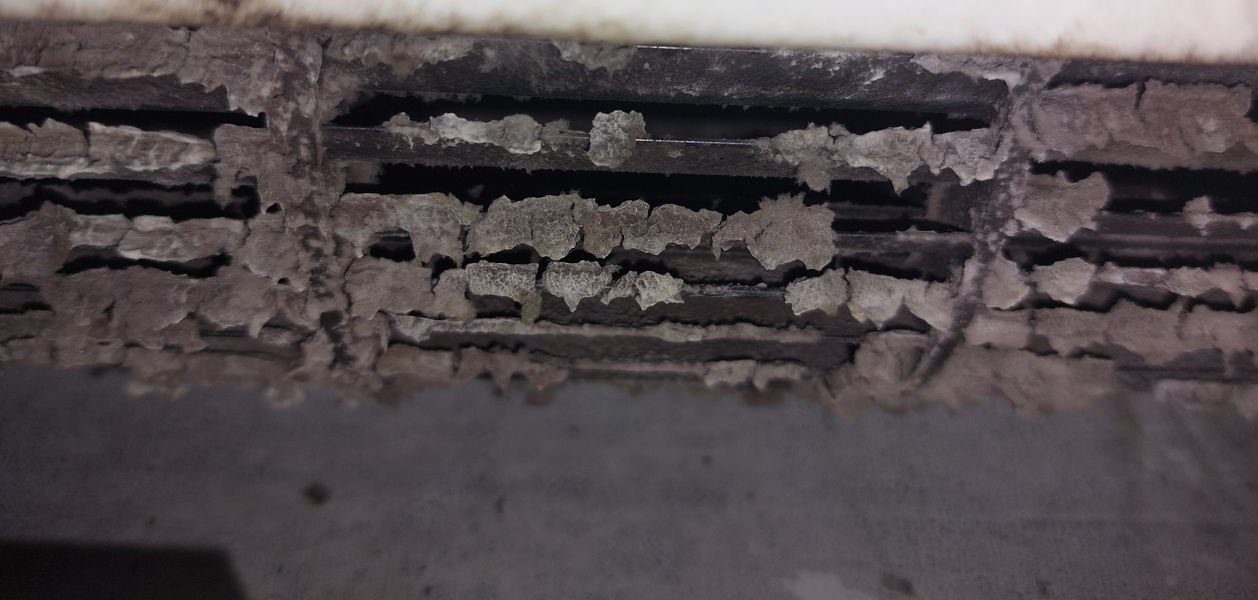
While a puddle on the floor or a water stain on the plasterboard is an immediate nuisance, the most significant threat of an indoor leak is often invisible. Standing water in a blocked condensate tray or stagnant moisture trapped within a clogged coil creates a damp, dark, and warm environment where mould and bacteria can grow quickly. In the Tasman region, where humidity can fluctuate significantly, these microorganisms can colonise the internal chassis and fan drum of your unit.
When the system fan engages, it does not just move air. It can blow mould and dust that has collected inside the unit directly into the room, which many people with allergies or asthma prefer to avoid. A leaking unit is typically the final stage of a long-term biological build-up. Simply clearing a physical blockage in the drain line might stop the water from overflowing onto your carpet, but it leaves the underlying sludge and microbial growth untouched, allowing the cycle of contamination to continue.
To properly protect your home environment, you need to address the biological cause rather than just the symptom. Our Hydro-Flush deep clean removes the organic food source that mould feeds on and clears the coils, fans, and drainage pathways. To keep your system clean and efficient, you can book your deep clean online.
Installation Issues and Levelling Problems
Beyond biological concerns, the physical position of the unit itself plays a role in moisture management. An indoor leak can sometimes be traced back to a unit that is not sitting correctly. Most indoor units need to sit level, or with a very slight fall towards the drain side, so water flows to the drain outlet. If the unit is tilted away from this outlet, water pools at the opposite end until it overflows the shallow rim and runs down your wall. We are cleaning specialists, so if you suspect a levelling problem, we recommend contacting your installer or a heat pump technician.
The fall or slope of the condensate drain pipe is equally critical. These systems rely on gravity to move water, so the pipe requires a consistent downward path to the exterior. In DIY installations, the necessary tolerances for effective drainage are sometimes overlooked, leaving a flat spot where water stagnates and eventually backs up. While our deep clean removes organic blockages, it does not correct installation, levelling, alignment, or drain pipe slope.
How to Fix a Leaking Heat Pump: DIY vs Professional Help
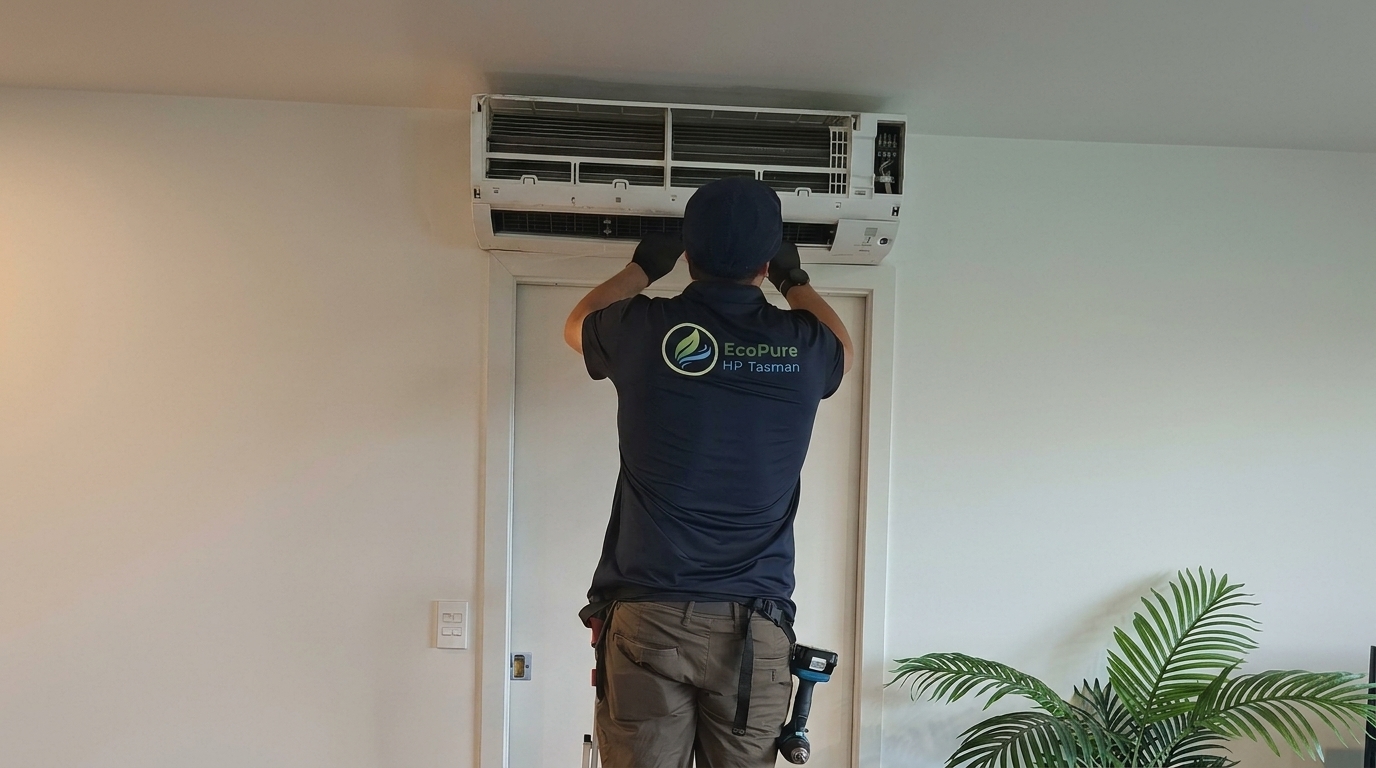
Once the unit is level and the installation is sound, managing a leak is about damage control and proper cleaning. If you discover your heat pump leaking water inside, turn the unit off at the wall immediately to stop the condensation process. Use a soft cloth to dry the wall and surrounding area to prevent moisture from damaging your paintwork or plasterboard. Next, check your mesh filters. If they are heavily clogged with dust, rinse them under lukewarm water and let them dry completely before reinserting.
Avoid the temptation to insert stiff wires or coat hangers into the internal drain outlet to clear a blockage. These plastic components are fragile; a puncture or disconnection behind the wall can transform a minor clog into a significant plumbing repair.
While homeowner checks are helpful, they cannot replace a proper deep clean. Our Hydro-Flush deep clean removes the casing and reaches areas brushes cannot touch, taking about two hours per unit to clear the biological build-up that causes sludge to return. To keep your home dry and your air clean, you can book your deep clean online.
How We Can Help
Here is a quick summary of how EcoPure Heat Pump Tasman works:
Our Hydro-Flush deep clean takes about 2 hours per unit
$169 for a single unit, $149 per unit for multiple units on the same visit
No call-out fee
We clean high wall-mounted and floor console units
Serving Nelson, Richmond, Motueka, Mapua, Brightwater, Wakefield, Moutere and surrounds
Book online or call 027 272 5471
A leaking heat pump can be a real inconvenience, but the good news is that many of the causes are straightforward to resolve. A blocked drain or a dirty coil that keeps freezing are both things a proper deep clean can address, while installation and refrigerant problems are best left to your installer or a heat pump technician. If you're unsure what's causing your leak, get in touch and we'll help you work out whether it needs a deep clean or a technician.
Frequently Asked Questions
Can I still use my heat pump if it is leaking?
It is best to turn the unit off at the wall and dry the area first. A small amount of condensation outdoors is normal, but water coming from the indoor unit means something is not draining properly. Running it while water pools inside can lead to water damage or mould growth.
Will a heat pump service fix a leak?
It depends on the cause. A blocked drain line or a dirty coil causing ice to melt is something a thorough deep clean can often resolve. An installation fault, a cracked pan, or a refrigerant gas leak is a job for your installer or a licensed heat pump technician, not a cleaning-only visit.
Why does my leaking heat pump smell musty?
Standing water and damp sludge inside the unit are a perfect home for mould and bacteria. When the fan pushes air across those damp surfaces, it carries a musty smell into the room. Flushing the drain and cleaning the coil and fan removes the source of the odour.
How often should a heat pump be deep cleaned?
Once a year for most homes.